
Behind The Curtain: Sam Smith - Community Engagement as Social Practice
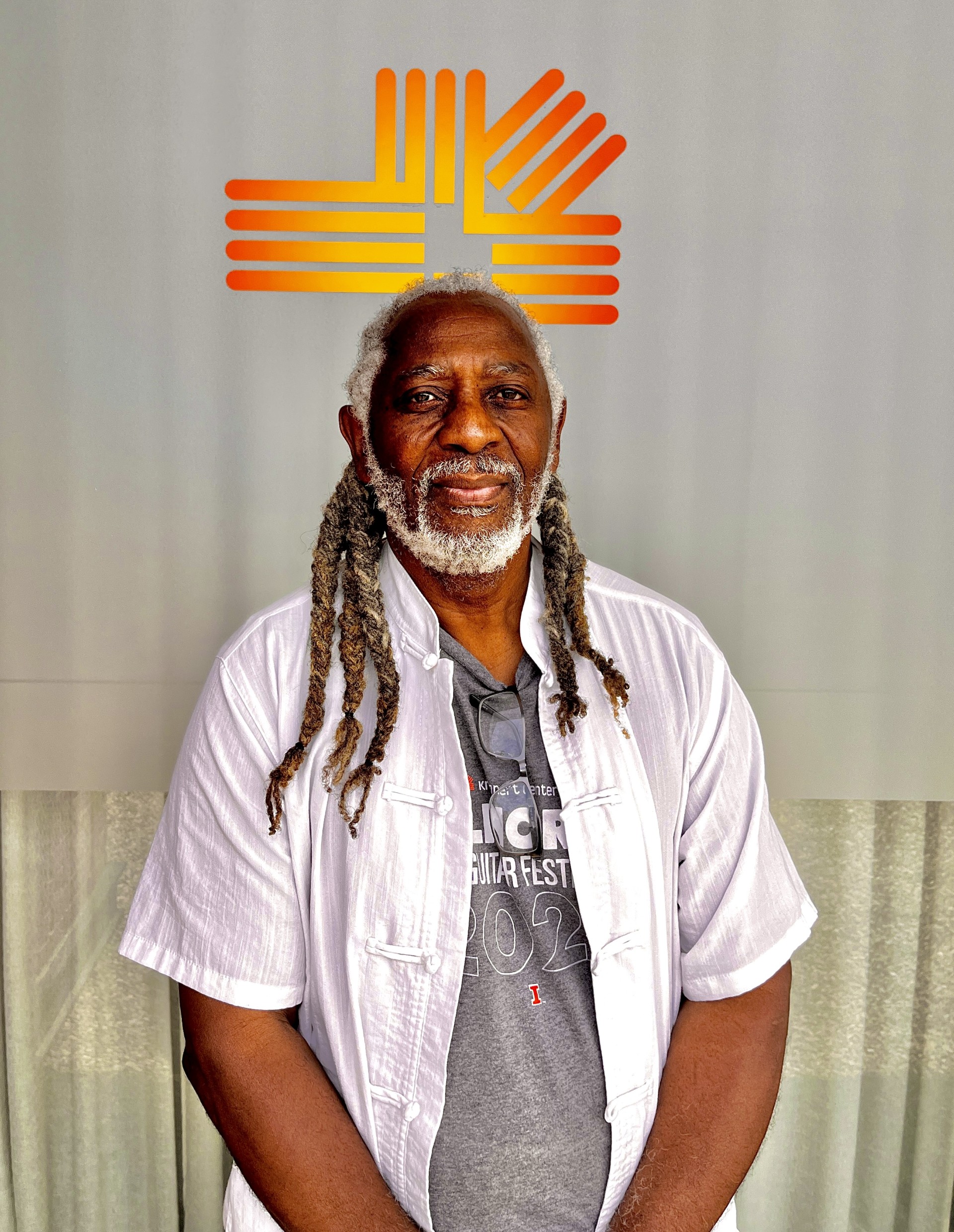
Ask Krannert Center’s Sam Smith what engagement means, and he won't start by talking about ticket sales, marketing campaigns, or audience development. Instead, he'll tell you a story.
Maybe it's about the graduate student from Iran who attended her first American play through a Krannert Center program and later became involved in international advocacy for Iranian women. Or the teenager who discovered music through a Krannert Center education program and years later credited that experience with helping him through depression. Or the elementary school child who encountered dance for the first time because an artist visited a classroom.
Those stories, Sam says, are the real measure of engagement.
For nearly two decades as Krannert Center’s Director of Civic Engagement, Sam has helped shape a philosophy that asks a simple question: what do we do after the performance is over?
For many performing arts centers, success is measured by attendance. To an extent, Krannert Center is no different: artistic excellence is the cornerstone of what we present and help teach—but engagement asks what comes next. How can a performance become a conversation? How can an artist's residency become a classroom visit? How can a student's first visit to the Center open the doors to a lifelong relationship with the performing arts?
"The performance is only the beginning," Sam says.
Sam's own journey helps explain why he feels that way.
"I usually say I grew up on the East Coast—from New York down the Atlantic seaboard," he says. "I had a foot in a few different worlds."
Growing up in Brooklyn after his family moved north during the Great Migration, Sam learned early that access shapes opportunity. As the first male in his family to graduate from high school and the first to attend college, he often found himself moving between communities that looked—and experienced the world—very differently.
Those experiences eventually led him to study clinical psychology, social work, and child welfare and advocacy.
"It turned out I was good at it," he says simply.
Working with children and families taught him something that still shapes his approach today: meaningful relationships begin with listening. That philosophy eventually found a home at Krannert Center.
A Performing Arts Center as a Community Partner
When Sam talks about engagement, he isn't describing a department. He's describing a way of thinking about the institution itself.
"One of the questions we wrestle with is, what's the relationship between artists, audiences, donors, and communities? Community engagement strengthens those relationships and creates opportunities for new ones to grow.”
Sometimes that means inviting K–12 students to Krannert Center through our Youth Series for their first live performance. Sometimes it means sending artists into schools, libraries, and neighborhood organizations to lead hands-on workshops. Sometimes it means creating conversations around difficult topics raised by a performance or partnering with local organizations to explore issues affecting the community.
The goal isn't simply to increase attendance; it's to make the performing arts part of community life.
That work has grown significantly over the years. Today, Krannert Center's Engagement team works across disciplines and departments, collaborating with artists, faculty, schools, nonprofit organizations, and community partners to create experiences that extend well beyond the stage.
As Sam puts it, “Krannert Center occupies a unique position in our community. Its mission is to nurture artists, present artistic work, and explore culture. Engagement is part of that mission because engagement helps create the conditions in which artists and communities can meet one another.”
The impact of that work isn't always immediate. Seeds can take a long time to sprout and grow, and success has to be measured differently
One story has stayed with Sam for years. His son mentioned a childhood friend who had struggled with depression and found comfort through making music.
"Dad," his son told him, "he started because of the John Lennon bus that came to Krannert Center."
"I had no idea," Sam recalls. "I was one of the people who helped bring that program here."
For him, that moment illustrates something traditional attendance reports never can: you may never know how a single artistic experience changes someone's life.
"I think as we begin to tell more of these stories," he says, "we'll get a deeper understanding not only of the reality of a place like this, but the potential of a place like this."
Looking ahead, Sam believes engagement will become even more important. He points to shrinking arts education budgets, changing communities, and growing social divisions as reasons cultural institutions must think differently about their role.
He hopes Krannert Center can continue expanding partnerships with schools, neighborhood organizations, and community groups, helping ensure that more young people have meaningful opportunities to experience theatre, dance, and music.
He also believes engagement should help people feel that Krannert Center belongs to them. For Sam, investing in engagement is one way the Center demonstrates those values—not by replacing artistic excellence, but by extending its impact.
He worries about the young people who never discover dance because no one invited them into a studio. He thinks about students who have extraordinary talent but limited access. He imagines a future where every child has opportunities to experience the arts, regardless of background.
Those ambitions aren't separate from Krannert Center's mission, they’re an extension of it.
“I've spent much of my professional life working with people who have been told they can't learn, or who simply haven't been given access to the opportunities that allow learning to happen,” Sam notes. Sometimes the barrier isn't ability…sometimes it's opportunity. Sometimes it’s access.”
Perhaps that's the simplest way to understand engagement at Krannert Center. It's not just about introducing audiences to performances, it's about creating opportunities for people to see themselves in the arts, to build relationships through shared experiences, and to discover possibilities they may never have imagined.
Because when the curtain falls, the show isn’t over. In many ways, Sam says, it’s just beginning.