
Behind The Curtain: Rick Scholwin - Searching For The Sound
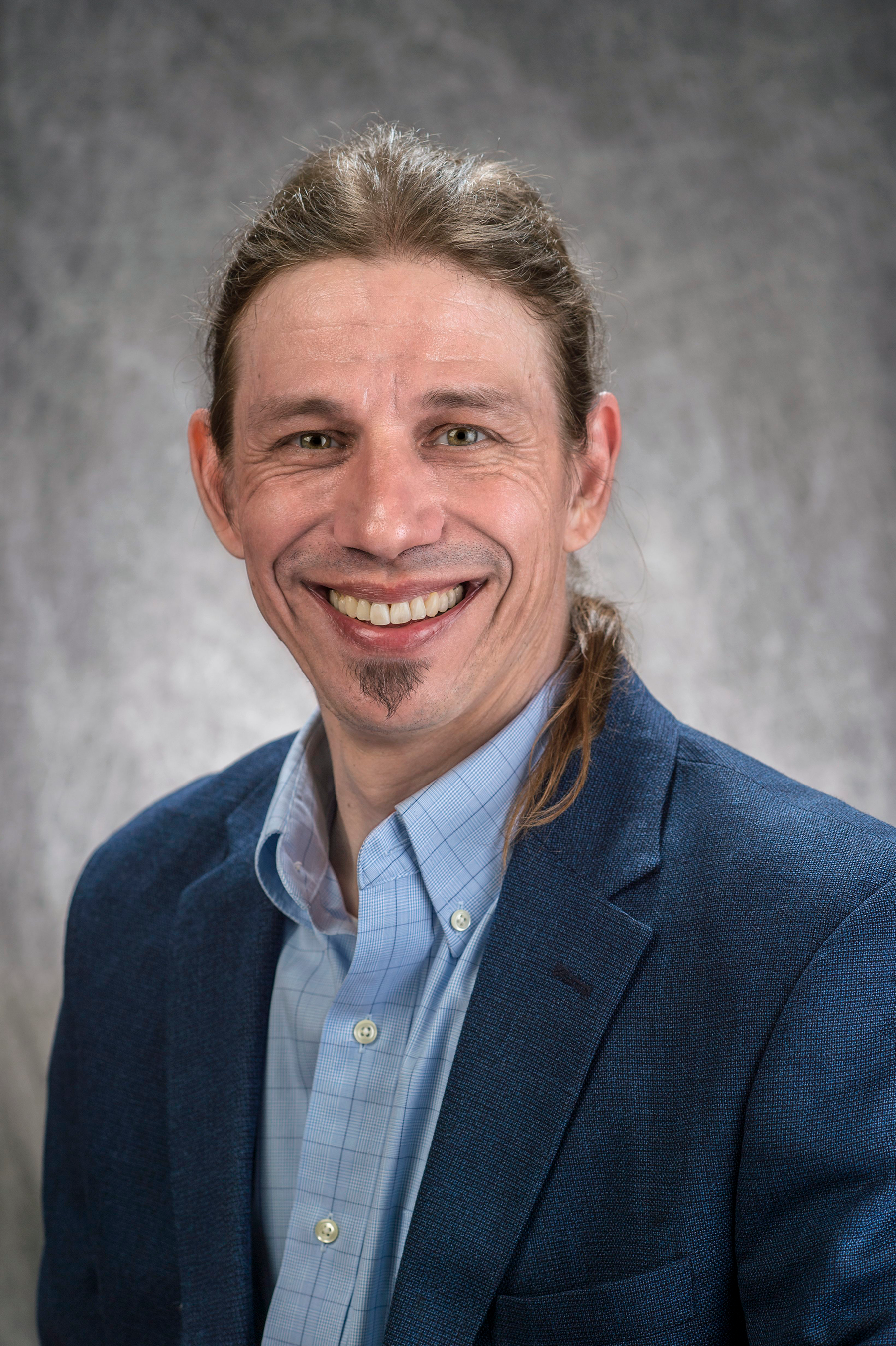
At Krannert Center a few years ago, a technical problem brought Audio Director Rick Scholwin out from behind the mixing console and onto the stage in the middle of a performance. One of the band’s instruments suddenly went quiet. Rick’s students couldn’t immediately find the problem, so Rick went back to basics: follow the signal. He started at one end of the system and worked his way through until he found the culprit.
The interruption was unavoidable, but Rick knew there was no reason for the audience to sit in silence wondering what was happening. He walked to the front of the stage and told them, “Now you know what my life is like, folks.”
The audience laughed, and the problem was fixed. “The show goes on,” Rick says.
Rick Scholwin’s philosophy about audio, and about his career, is just that simple: the show must go on.
Rick grew up in a small town in northern Wisconsin, where the traditional career paths were pretty straightforward. “It was engineering, doctor, teacher…very traditional tracks,” he recalls.
Music wasn't necessarily part of the plan. Rick loved his rock n’ roll, and a friend who played bass in a metal band occasionally put him behind a mixing console. At first, it was little more than an opportunity to hang out with his friend's band and “maybe make 50 bucks, maybe not.”
Eventually, he realized there might be a career hiding behind that console. Since he went to a lot of gigs and saw a lot of bands, he got more and more curious. “I was asking everybody behind a sound board, ‘How’d you get your job? How’d you get your job?’” He was surprised to learn that nobody he asked followed a straight path into the profession.
That realization made Rick get serious, and eventually led Rick to DePaul University, where he earned a degree in recording engineering. From there, doors opened. His career took him through recording studios, live sound engagements, universities (including here at Krannert Center for a time), and professional theaters, including the Denver Center and the Mondavi Center at UC Davis.
It was at UC Davis, while working in audio, that Rick says he finally understood the connection between sound and theater.
“When Rocky Horror came through one of our venues, I went, ‘Oh my God. Now I understand. Now I get it.’”
He realized that sound wasn't simply about microphones and speakers. It was part of the storytelling.
Rick would eventually return to Krannert Center in 2015, completing a “circle of life,” as he calls it. “I’m not saying I didn’t work hard,” he says. “But yes, things just keep leading to themselves.”
Now, as Krannert Center’s Audio Director, Rick is responsible for making sure that the sound throughout the building supports both the artists and the people who come to hear them. That responsibility will be especially visible, though hopefully not noticed, during the Opening Night Party on September 3.
Rick and his team have been preparing for the event for months. For an audience member, Opening Night is a party. For Rick, it is a complicated audio puzzle involving multiple stages, different musical genres, different equipment needs and some very different rooms.
“We absolutely curtail our sound systems to the talent and to what the music genre is,” he explains. “If I need twice as many [bass speakers] as I would for somebody else because of that genre of music, I want to make sure that I am providing all of the actual physical equipment that it’s going to take to let them do their art and have it be received by the audience as it should be.”
But louder isn't necessarily better. “Feel and volume does not have to be ear-splitting,” Rick says. “During a performance, I’m constantly scanning the audience for fingers in ears and uncomfortable looks on people’s faces,” he says. “That is the absolute last thing that I want this audience to experience: uncomfortable volume levels.”
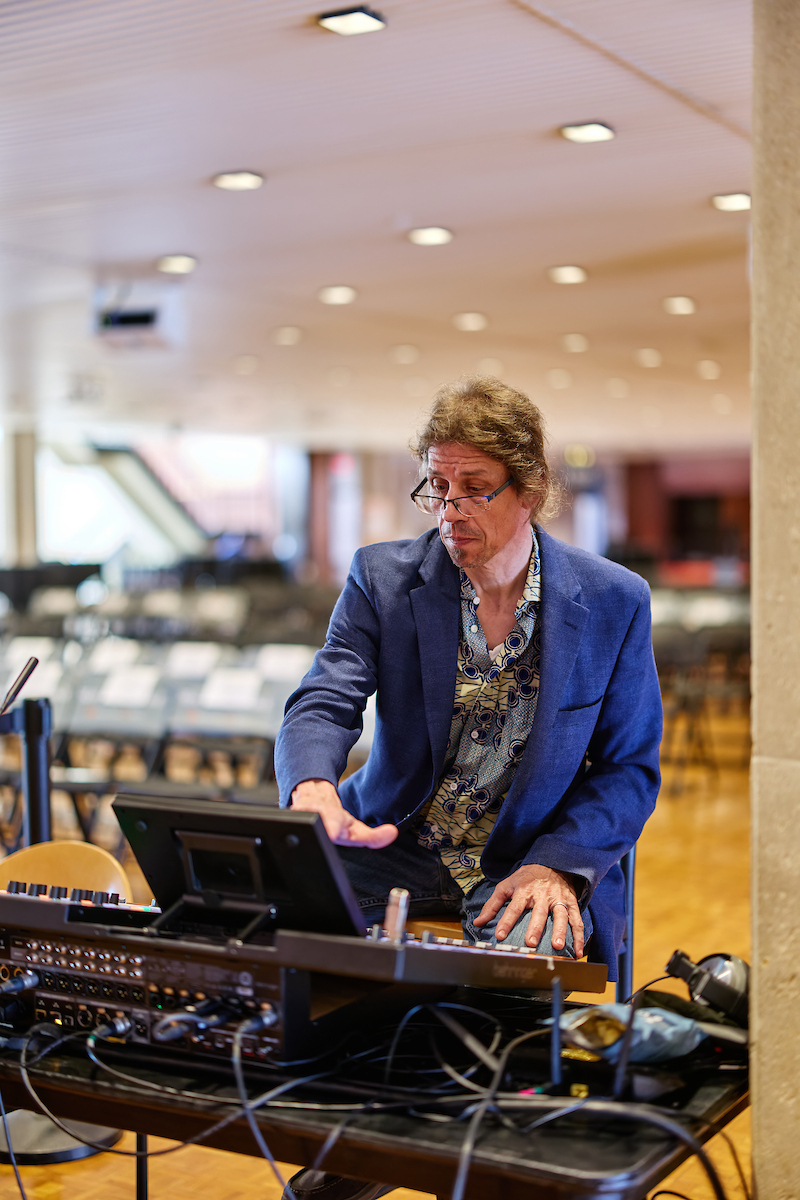
What Rick wants instead is immersion.
“Am I serving the artist with what they need and how they want to present themselves, and still having a euphoric audience who is just delighted to be in our lobby and experiencing the art that we are offering them sonically?”
That philosophy requires an extraordinary amount of preparation. Rick wants his engineers to understand the artists they are working with before they ever take the stage. Microphones, cables, stage monitors and backline equipment are checked in advance so that when the musicians arrive, they can concentrate on what they came to do.
“I want them worried about their art, their songs,” Rick says. “I want them to be able to do their work.”
His goal is almost absolute: “I want zero audio glitches. I want no bad cables. I don’t want anything to shake their confidence that performing at Krannert Center is not going to be a perfect experience for them.”
That doesn't mean things never go wrong. When they do, Rick's philosophy remains the same. “Was it a problem? Yes,” he says of the malfunctioning equipment during that earlier performance. “We fixed it. The show goes on.”
Behind Rick is a team of graduate and undergraduate students who get to learn this process by actually doing the work. Rick says his graduate students mix roughly 90 percent of performances at Krannert Center.
“They are walking the walk here,” he says.
Rick also credits those students and his professional colleagues with helping him continue to learn. Digital technology has transformed the audio world since Rick began his career, and although he still keeps some analog equipment around as a backup, he says his younger colleagues have helped bring him into the digital age.
“I learn from them all the time,” he says. “They’re just brilliant.”
That exchange between experience and new ideas is part of what Rick values about working at Krannert Center. And perhaps it explains why, after 30 years in the profession, he approaches Opening Night with something that might surprise people who assume live audio is inherently stressful.
“I’m not worried anymore,” he says. “I know it’s going to go great. I’ve done my homework. I’ve got world-class sound systems in here.”
For Rick, that confidence is the result of years of work, preparation and investment in the center's audio infrastructure. But it is also rooted in something deeper.
“I often say music saved my life,” Rick says. “Being able to immerse myself into sound and music, and having a proclivity for it, really just helped my confidence and helped me become who I am.”
That may be why his definition of a successful night is so simple. “A great night is happy faces and very few comments.”
The best compliment, he says, may be hearing after an event that an artist wouldn't stop talking about how good the audio was.
“I didn’t need to hear that firsthand. It came back to me eventually,” he says. “That’s all I need to know; that they left here thinking, ‘Man, that was amazing, and I can’t wait to get back here again.’”
On September 3, hundreds of people will gather at Krannert Center to celebrate the beginning of another season with our annual Opening Night Party. They'll hear great music, eat, drink, visit with friends and discover something new.
Behind it all, Rick Scholwin and his team will be listening intently. They'll be watching the performers and the audience, checking microphones, monitors and speakers. They'll be ready for whatever goes wrong.
And if they do their jobs right, most people won't notice them at all.