
Behind The Curtain: Level 21, Krannert Center's Student Cross-Training Hub
If you’ve spent much time around Krannert Center, you’ve probably heard people mention Level 21. But what exactly is it?
The easiest way to understand Level 21 may be to talk with the people who experience it every day, from the professionals who help shape the program to the students who are learning to become the next generation of performing arts professionals.
Terri Ciofalo, Krannert Center’s director of production and a member of the stage management faculty in the Department of Theatre, has been part of that world since she arrived at Illinois in 2007.
So, where did Level 21 come from?
“The history of Level 21 actually starts with what we would have called then DDT, the Division of Design and Technology,” Terri explains. “It was started in 1979. The dean of Fine and Applied Arts at the time, Jack McKenzie, recognized the unit as sort of a sub-unit in the Department of Theater and of Krannert Center.”
The origins of Level 21 were tied to an ambitious idea: Krannert Center had been built to bring the University’s performing arts together under one roof, but the academic and professional sides of that operation were still figuring out how to work together. The solution was to bring the professional staff and academic faculty together.
“So, DDT gets made,” Terri says. “That’s a joint effort between those professionals and the few design faculty who were part of theater. And that was approved in 1979. That’s our roots, our origin story.”
Over time, DDT became DDTM (Design, Technology and Management) and eventually evolved into Level 21.
The name reflects the philosophy behind the program. “We didn’t want to leave anyone out,” Terri explains. “If you count the floors in Krannert Center – from all the way down at the first level of the parking garage to all the way up to the sixth-level production booth—it add up 21. It represents that we’re not siloed as departments, we’re these cross-functional teams. So we all sort of work on Level 21.”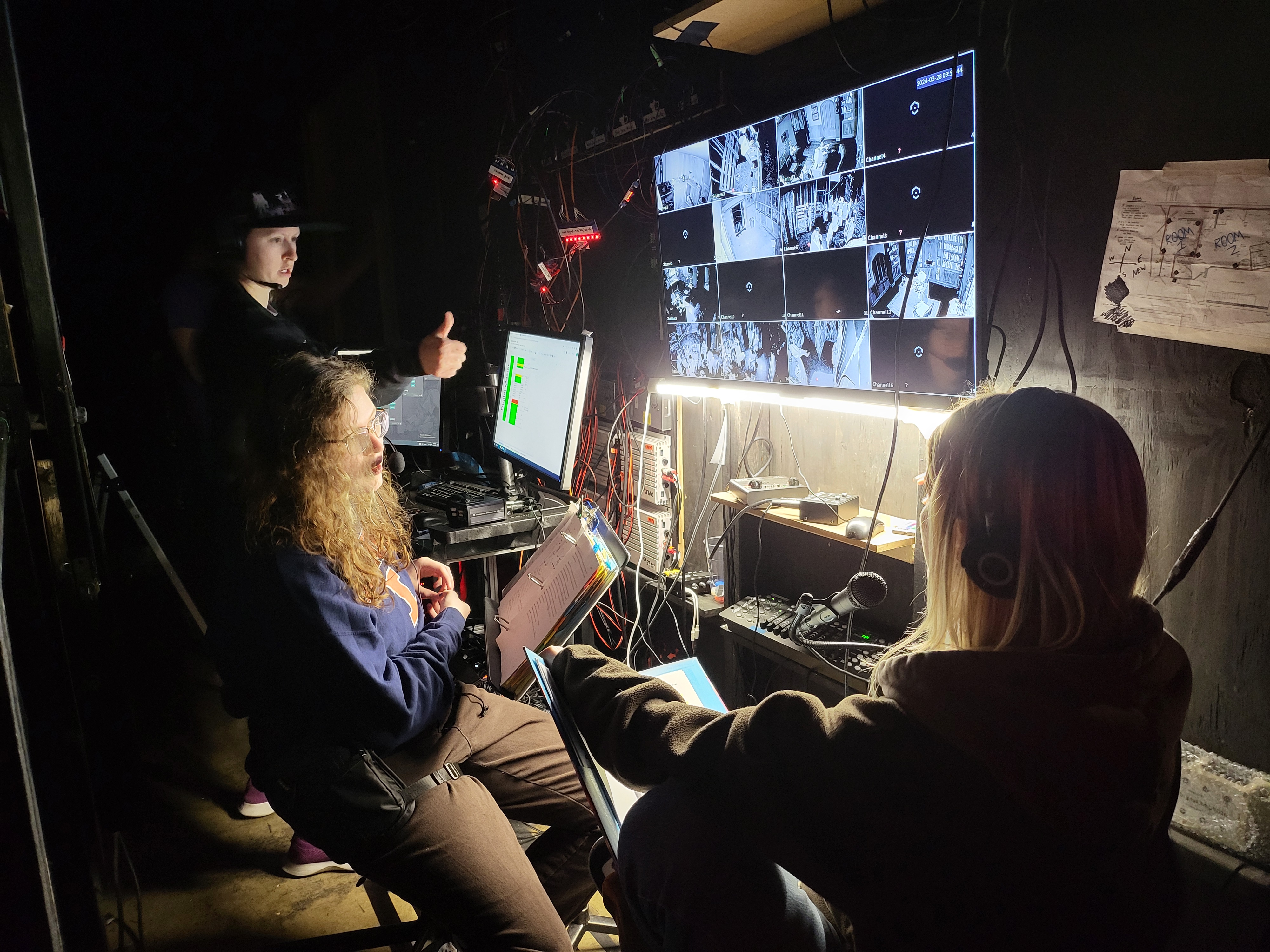
Terri is quick to point out that Level 21 isn’t a single academic unit. “Level 21 isn’t its own program,” she says. “It is a collective of all the design, technology and management programs into one area.” Students specialize in disciplines such as lighting, sound, stage management, scenic technology and costume work. But they aren't expected to stay inside a single disciplinary bubble.
“In our curriculum, a lot of programs have cross-disciplinary training,” Terri says. “So if you come to study how to be a stage manager, you’re not going to only study stage management. You’re going to have to take a lighting class, and you’re going to have to take a scene shop class, and you’re going to have to take a sound class.”
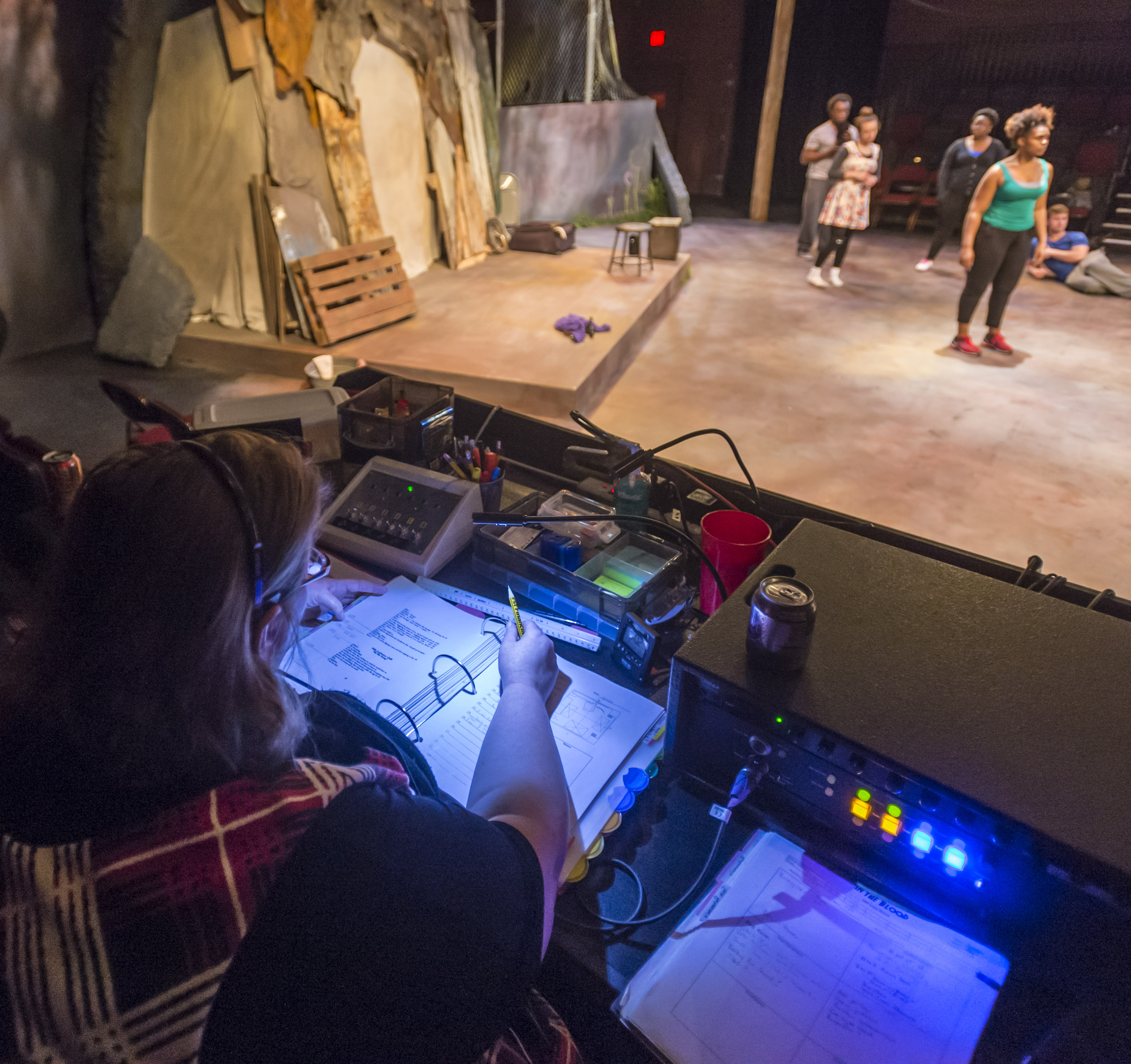
The education doesn't stop in the classroom. Terri describes Krannert Center’s theaters and shops as functioning laboratories. Students learn while contributing to actual productions, working alongside the professionals who make those productions happen.
For Lauren Boesch, who is completing her Master of Fine Arts in Stage Management and is part of Level 21, that connection between classroom learning and real-world experience has been one of the most rewarding parts of her time at Illinois.
“I've been really grateful for my connection to Krannert Center,” Lauren says. “Between my classes and my assistantship, I've gotten a much deeper understanding of how a theater organization actually works.”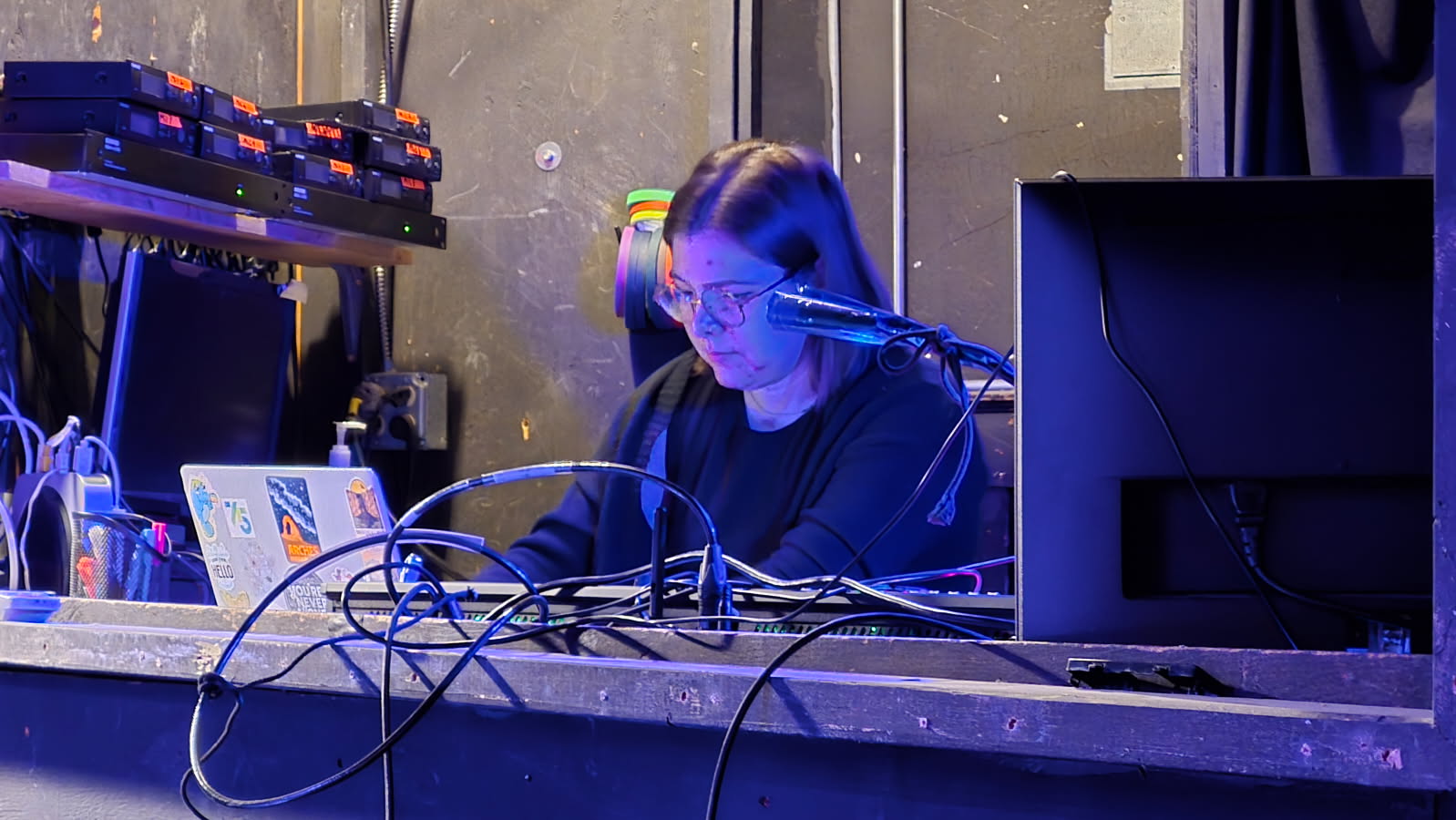
She explains that her coursework has helped her put names to things she might previously have understood only in practice. “In class, we're able to really dig into the different systems and the individual pieces that make a performing arts organization function. Then, through my assistantship, I get to see all of that happening firsthand. It's one thing to talk about how an organization works, but it's another thing entirely to be part of it.”
That firsthand experience also means working with people across Krannert Center. “I get to collaborate with so many different departments and learn more about what everyone does,” Lauren says. “And I also get to attend such a wonderful variety of performances. Those experiences really deepen the conversations we're having in class.”
For Terri, the most important lesson may have less to do with any particular technical skill than with collaboration.
“We are all about the collective. When we are in collaboration together, we actually do our best and most creative work,” she says.
That means learning how to work as a team, how to lead a team and how to be a generous collaborator; someone who makes room for other people and their ideas.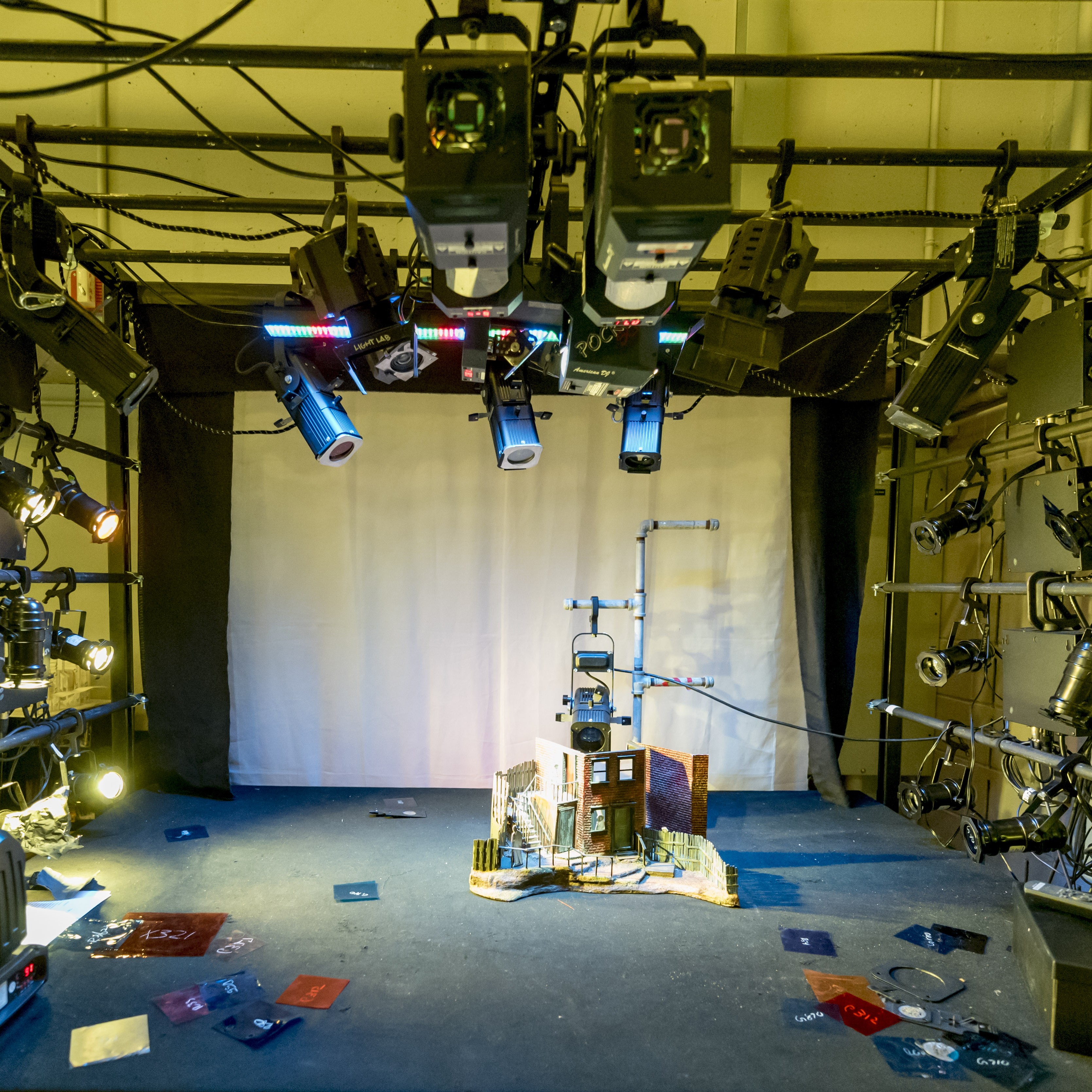
Lauren has found that philosophy particularly meaningful through her graduate assistantship with Krannert Center's Youth Series.
“Being the graduate assistant for the Youth Series has been such a privilege,” she smiles. “I've had the opportunity to get real-world experience, receive constructive feedback and, most importantly, support the Urbana-Champaign community in a meaningful way.”
It's an opportunity that connects her academic work with the broader purpose of a performing arts organization: bringing performances and experiences to the people in its community.
“That's been deeply fulfilling for me during my time here as a graduate student,” Lauren adds.
Terri also believes that learning to make mistakes is an essential part of the process.
“We're going to make mistakes. We're going to have some failures,” she says. “As long as everyone's safe, it can be ugly, you know, in the end. But that's how you learn.”
Ultimately, Terri describes the philosophy behind Level 21 in three ideas: “student-centered, artist-driven, professionally produced.”
The goal isn't to expect students to already be professionals; it is to show them what professional practice looks like and help them develop the skills, judgment and collaborative instincts to become professionals themselves.
It's not simply a collection of majors. It's not simply a place where students learn technical skills. It's a collective of people learning how to make art together. As Terri puts it, the goal is to “take your designs or your engineering skills or your management ability to a place you couldn't have gotten to on your own.”
And for students like Lauren, that education happens every day, both in the classroom and in the very real, very busy world behind the curtain.
That may be the best way to understand Level 21: not just what happens behind the curtain, but who is learning how to make the curtain rise.