
From Brooklyn to Champaign-Urbana: How Dance Brings People with Parkinson’s Together at Krannert Center
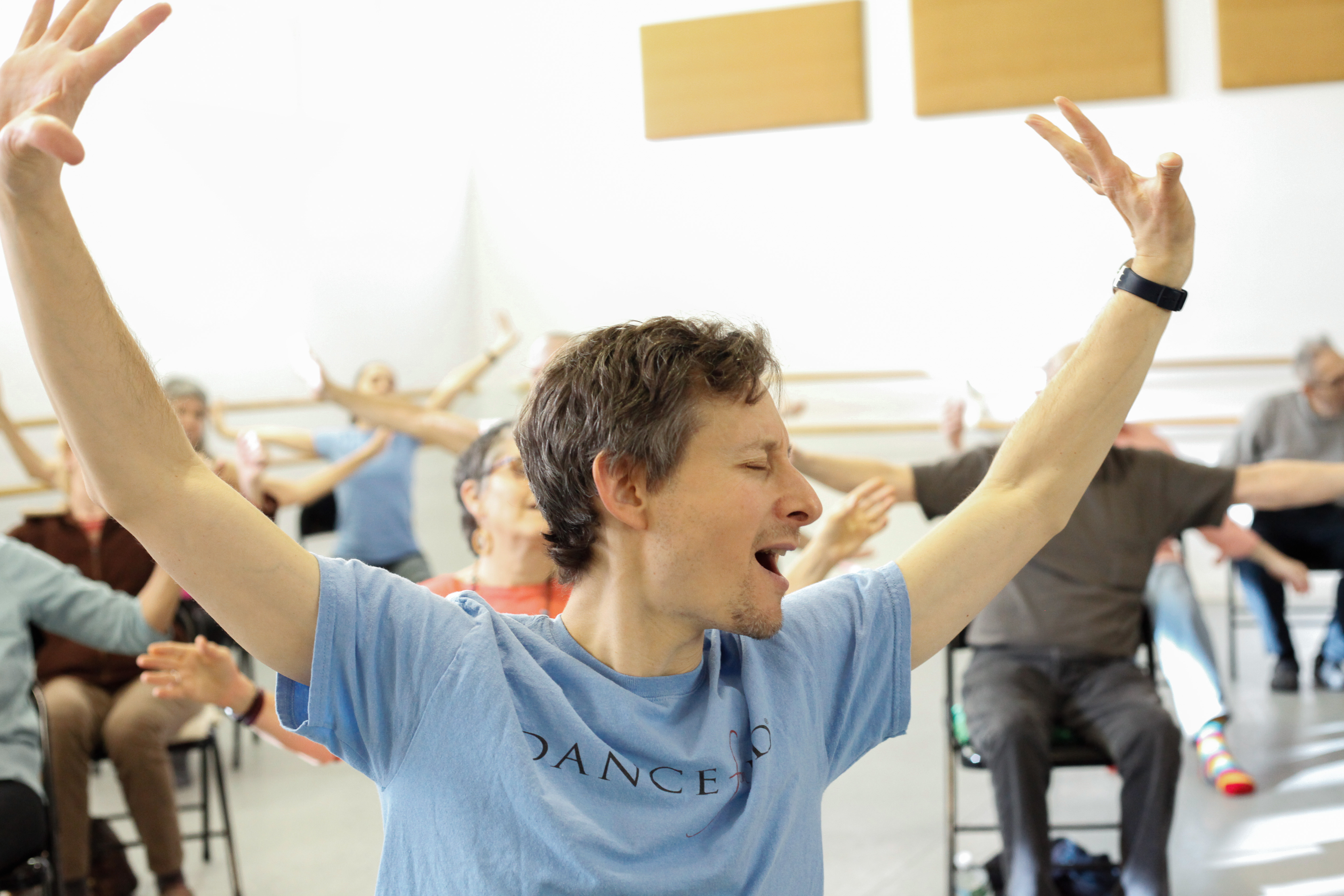
In a dance studio in Brooklyn 25 years ago, six people with Parkinson’s gathered for a class that would grow into an international movement. The idea was simple but ambitious: bring people together through dance, music, creativity and the shared experience of moving.
Today, that idea reaches communities around the world. And its story has a particularly meaningful chapter at Krannert Center for the Performing Arts, where Dance for People with Parkinson’s has become an important part of the Champaign-Urbana community.
For David Leventhal, who helped launch the program as a dancer with the Mark Morris Dance Group, the experience began almost by accident. What followed would change the way he thought about dance, teaching and the possibilities of artistic engagement.
A new kind of dance class in Brooklyn
Leventhal's own path to dance began when he was eight years old. Growing up near Boston, he started with figure skating before discovering ballet at Boston Ballet. He continued dancing through high school and college, eventually moving to New York to pursue a career in modern dance. In 1997, he joined the Mark Morris Dance Group, where he would spend more than 14 years as a full-time company member.
In 2001, the company opened a purpose-built dance center in Fort Greene, Brooklyn. The new space was intended to be more than a home for the company and a place for professional dancers to rehearse; the organization wanted it to become a community resource.
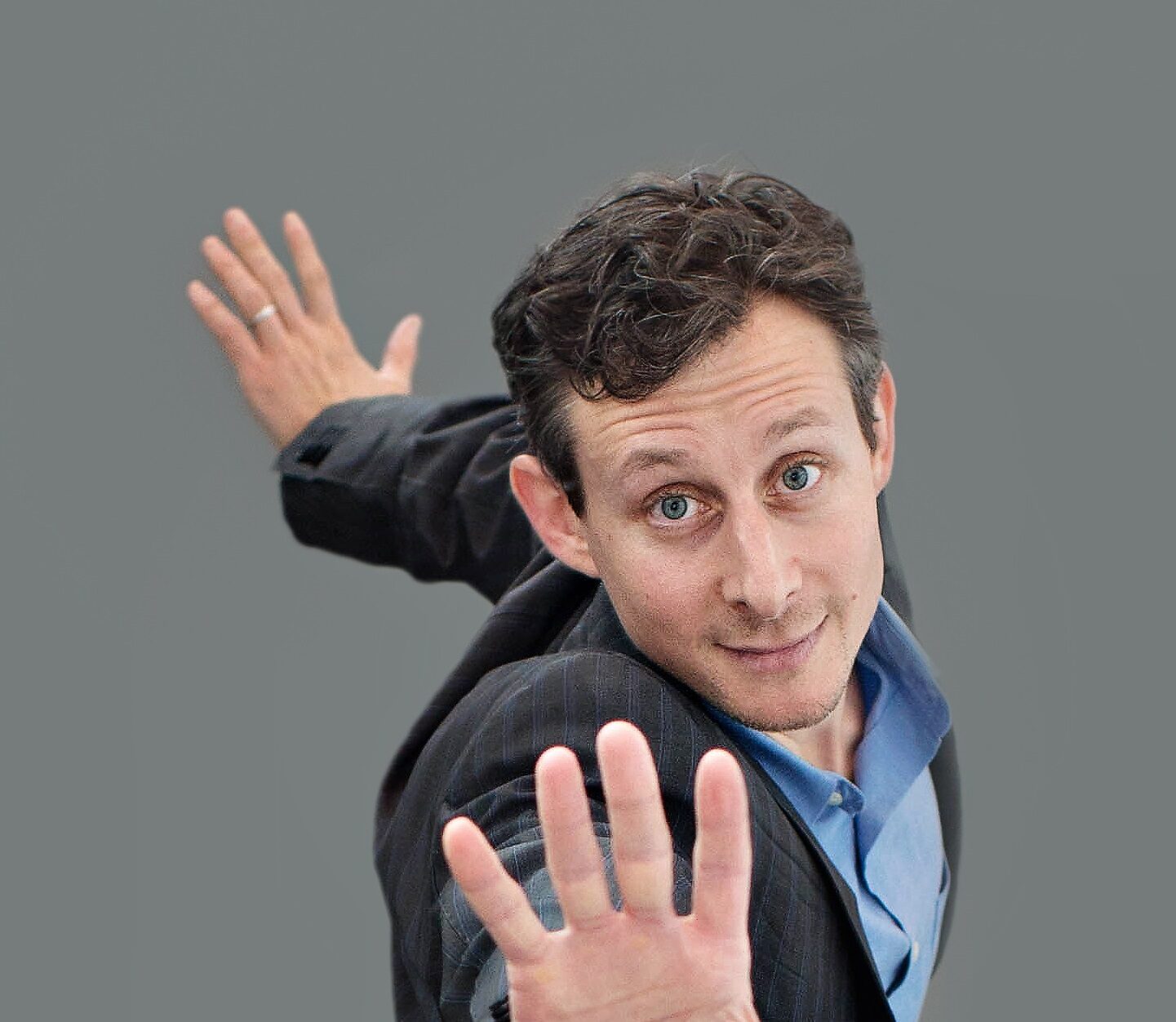
One of the first people to approach the company was Olie Westheimer, a leader of the Brooklyn Parkinson Group. After reading a New York Times article about the new center, Westheimer saw an opportunity to bring dance into the lives of people living with Parkinson’s.
“She had been thinking for a while about the possible benefits of dance in supporting the experience of people in her group,” Leventhal recalled. “I think she was thinking about not just the physical benefits, but a social environment, a place where people could get together and do something that wasn't related to Parkinson's.”
Westheimer understood that dance could offer more than physical activity. With a background in dance herself, she recognized the potential in choreography, movement, rhythm and learning. Just as important, she envisioned a place where participants could share an experience that was meaningful and enjoyable without making their diagnosis the center of attention.
The first class took place in the fall of 2001. Leventhal had not originally been scheduled to teach it. His colleague John Heginbotham was supposed to lead the session, but a family emergency made that impossible. Leventhal stepped in as a last-minute substitute.
“It was a very happy accident,” he said.
Six people with Parkinson’s attended. Leventhal began with seated movement, gradually building into a warm-up and incorporating choreography from the Mark Morris repertory. The class ended with participants standing in a circle, passing a hand squeeze around the group and sharing a bow. The exercise, known as “Pass the Pulse,” remains part of the program’s closing ritual.
What Leventhal remembers most, however, is the participants’ extraordinary concentration.
“I'd taught all different populations and all different age groups, and they were by far the most focused, engaged students I'd ever had,” he recalled. “For them, it seemed like this was something of a lifeline. It was access to freedom. It was access to feeling good again in their bodies. It was access to regaining a sense of control.”
He also noticed something unexpected as the class ended. Participants seemed to move with greater fluidity and rhythm as they left the room.
“I thought, ‘There's something going on here.’”
That initial experience convinced Leventhal that the class was offering something important. He and Heginbotham began teaching together, eventually co-leading classes for the next decade.
From the City to the Prairie
The Mark Morris Dance Group was a touring company, performing around the country and internationally. But its members wanted their visits to communities to mean more than arriving, presenting a performance, and leaving. They wanted to share the community engagement work happening at their Brooklyn home with the places they visited.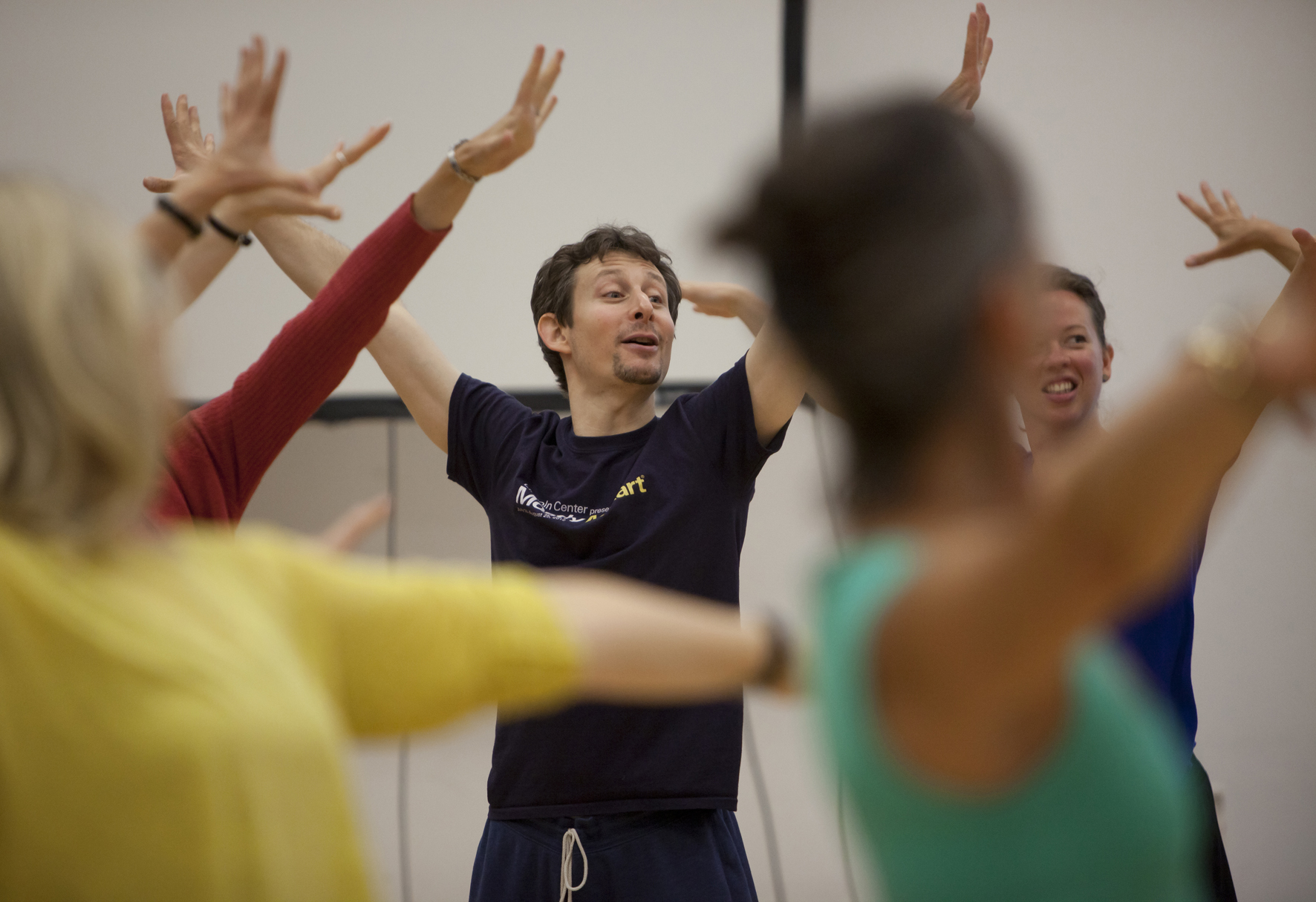
Krannert Center was a natural partner. Leventhal remembers the Center's commitment to community engagement, particularly through its relationship with Director Mike Ross, as a reason the company returned to Champaign-Urbana for work beyond the stage.
About 18-months after the Brooklyn program began, the company brought Dance for PD to the University of Illinois. The first class outside New York City took place in the Krannert Room, in collaboration with the local Parkinson’s support group. Approximately 15 people attended—more than twice the number at the original Brooklyn class.
“The response was incredibly positive,” Leventhal said. “People loved the class.”
He and Heginbotham co-taught the session, and the company returned during subsequent residencies to offer the class again. Those annual visits helped establish a local audience and demonstrated that the program could succeed beyond its original home.
In November 2009, Krannert Center took the next step, launching monthly movement classes modeled after Dance for PD. Kate Cooper was the first local teacher, and Whitney Havice, Krannert Center's Ticketing and Patron Services Director, became the class coordinator, a role she continues to hold.
Leventhal considers Krannert's early commitment especially significant. It was not only the first place outside Brooklyn to host a Dance for PD class; it was also the first performing arts center to regularly host and sponsor this kind of program.
He sees that relationship as an important model for arts organizations: a performing arts center can serve its community throughout the year, not only when audiences come to see a performance.
A community united through movement and music
For Havice, the transition from an annual special event to a regular community offering was driven by the response of participants.
“The class that the Mark Morris Dance Group instructors had been offering during their yearly residency at Krannert Center was incredibly popular, and there was a huge response in the community, with participants requesting that it become a more regular occurrence,” she said. “It fulfilled a need that I don't think many in the community realized was missing.”
She remembers the early classes as occasions filled with curiosity, excitement, and a growing sense of connection. “There was an air of excitement, curiosity, and a sense of community that immediately formed around the participants, the instructors, accompanist, and organizers. It was a joyful experience, and that joy is still very present in our classes today.”
That sense of belonging remains one of the program's most important features. The class is designed with people living with Parkinson’s in mind, but it welcomes anyone interested in participating. No previous dance experience is required.
For Beverly Hillmer, a piano accompanist with the University of Illinois Department of Dance, the program also became personal. She was initially asked to play for one of the Mark Morris Dance Group's classes and immediately recognized a connection between her own experience and that of the participants.
“I said yes, in part because I had multiple sclerosis that had greatly impacted my career as a pianist. I felt a connection to people who were experiencing loss of physical control and adjusting to life with new limitations.”
She never stopped playing for the class.
“Two words for me capture why I love being part of this: Community and Joy,” Hillmer said.
As an accompanist, Hillmer enjoys the musical conversation that develops between the participants and the piano. Sometimes she draws on show tunes or favorite songs shared by class members. Other times, she responds spontaneously to the movement happening in the room, creating a musical backdrop for the stories and emotions participants express through dance.
Hillmer treasures the laughter and the sense of family that have grown around the class. She especially appreciates the gentle, sometimes playful closing ritual, when participants, teachers and musician acknowledge one another and take a moment to savor what they have shared.
More than movement
Dance for PD is not simply an exercise class set to music. Leventhal describes dance as an experience that engages people physically, cognitively, emotionally, and socially.
Movement can help participants work on balance, gait, coordination, and functional mobility. Learning sequences and responding to rhythm also engage memory, pattern recognition, and attention. But Leventhal believes the artistic experience is equally important.
“This is not a class where we just put on happy music and dance,” he explained. “We try to represent the full range of the human experience in class.”
Participants might explore joyful music, melancholy songs or more serious material. They may improvise, interpret a story or contribute their own ideas. The goal is not to reproduce a perfect movement or perform for an audience. It is to create something together.
Leventhal often returns to the ideas of ownership and agency. Participants are not defined by what Parkinson’s has taken away or made more difficult. They are invited to make choices, express themselves and contribute to a shared artistic experience.
“That reinforces the sense that I matter, that I'm doing something that matters to me,” he said. “It pushes aside the question of ‘what's the matter with me.’”
The class is also designed to accommodate different abilities and changing needs. Movements can be done seated, standing, with support or while traveling through the room. There is no expectation that everyone will move in the same way.
“We never write people out of a class. We never ask them not to come. We never say something is too challenging and ask them to sit it out,” Leventhal said. “It's our job to make everything as accessible as possible and provide options so everybody feels there's a pathway for them at any stage of their journey.”
That philosophy helps create an environment where newcomers can feel comfortable, even if they arrive uncertain about dancing. Leventhal says he often sees people begin cautiously, sometimes insisting they have never danced before or have “two left feet.” But as the class unfolds, the music and collective movement can draw them in.
“About 20 minutes in, they get caught up in the wave of everybody moving together,” he said. “They're no longer that isolated person just trying to make sense of this strange world we're in.”
A lasting place in the community
For Havice, the most rewarding part of coordinating the program is seeing the relationships that develop among participants, instructors, musicians, and organizers.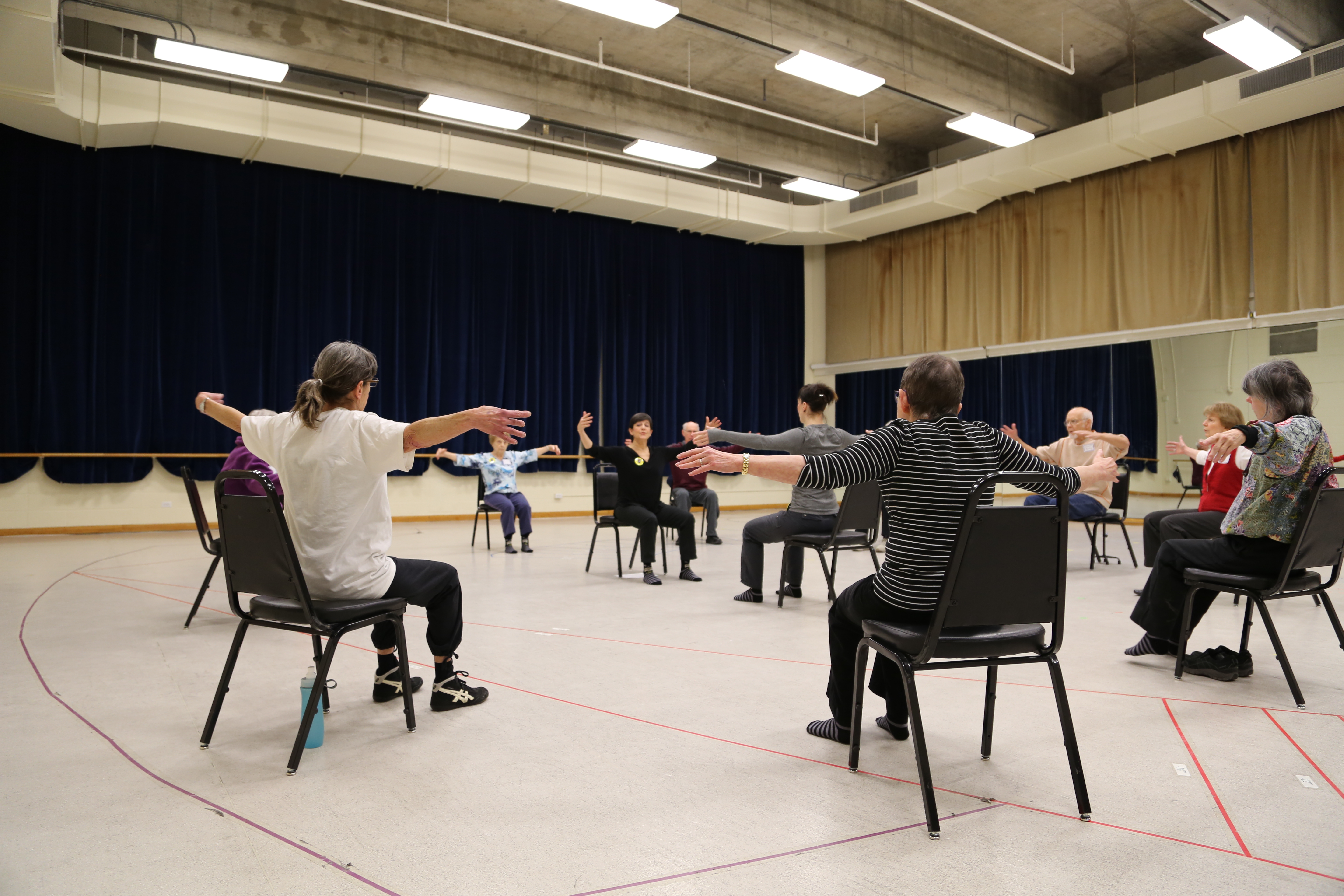
“The biggest reward for me is seeing the relationships and sense of community and belonging that have formed with everyone involved, both inside the class and out,” she said. “Some of the faces have changed throughout the years, but what hasn’t changed is the safe, welcoming space filled with movement, music, and laughter. And with that safety comes some really special moments.”
That continuity is part of what makes the program so meaningful. People return not only for the opportunity to move, but also for the friendships, music, laughter, and shared experience.
What began with six participants in Brooklyn has grown into a program offered at more than 500 locations in 31 countries, according to Leventhal. Yet its reach is measured in more than numbers. Its impact can be seen in the individual moments that happen in a classroom: a participant discovering a new freedom of movement, a room full of people singing together, or a familiar closing ritual that reminds everyone they belong.
At Krannert Center, the program's history reflects a long-standing belief that the performing arts can build community in ways that extend well beyond the stage. The Center helped bring Dance for PD beyond Brooklyn, then made it a continuing part of life in Champaign-Urbana.
And after all these years, the purpose remains much the same as it was in that first class: to make space for creativity, connection, and joy.
_____________________________________________________________
Dance for People with Parkinson’s is offered once a month on a Friday at 10am at Krannert Center. All are invited and there is no cost. Visit our events calendar for specific dates.
Parkinson’s Disease resources:
Parkinsons.org
The Michael J. Fox Foundation for Parkinson’s Research
American Parkinson Disease Association – Illinois Chapter
Resources in Champaign County: